
How to Use AI Without Losing Your Voice in Writing, Design, and Content Work
Cross-discipline tactics for creative work with AI: why intent separates craft from slop, the voice-sample prompt that beats "write in my tone", and what designers face that writers don't.
MDCrafter Team
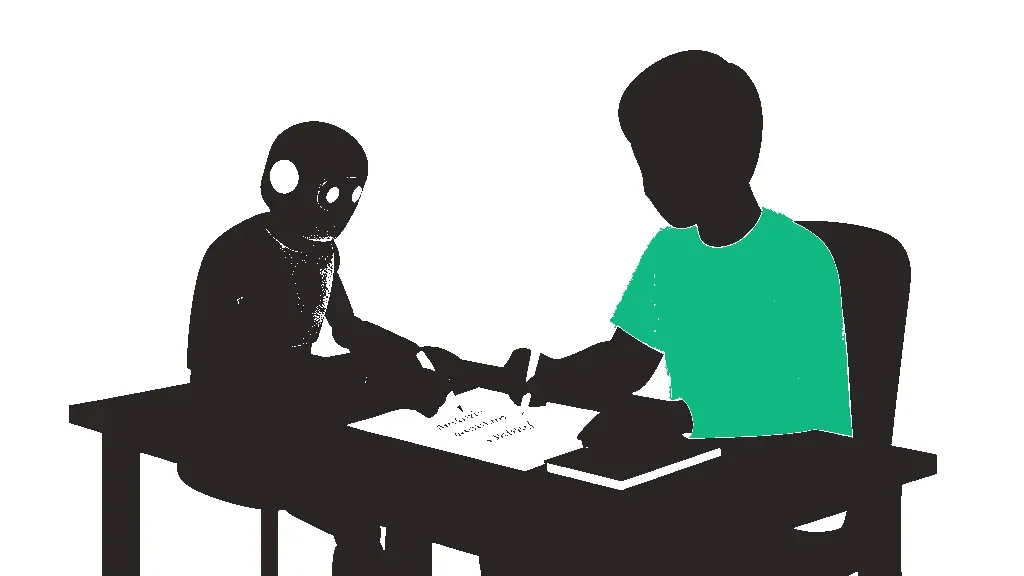
Somewhere in the middle of a draft, Google Gemini asks whether you'd like it to polish things up. Say yes once and the sentences come back smooth and weirdly corporate: let us explore our mutual synergies, I am your one-stop shop. One writer got so worn down by the nagging pop-up that he shut the laptop and wrote an entire day's draft with a pencil.
That's the actual question behind how to use AI without losing your voice. Not whether the tool is any good, but who is still making the decisions once it's open.
AI slop is defined by intent, not by tool use
The word for what everyone is complaining about now has its own Wikipedia entry. AI slop covers the low-effort, mass-produced text and imagery filling up feeds, and Axios dated its mainstream moment to the Studio Ghibli style image wave of early 2025. The most useful reframe I've seen comes from MindStudio's team: AI slop isn't defined by tool use, it's defined by intent. What makes something slop is that nobody involved believed in it or expected anyone to read it.
That distinction takes the moral weight off the software and puts it back on the workflow. A designer using generative fill to clean up a background isn't producing slop. A content team shipping forty posts a week that nobody reads, themselves included, is, whether or not a model touched the words.
Your audience is already suspicious, and there's a number on it
Here's the commercial reason to care rather than the romantic one. A roundup of design-industry pushback published on the Sandford PR Substack cites research that 40% of American consumers say their opinion of a brand would worsen if they knew it used AI. Not that the work got worse. That knowing changes how they feel about it. The same piece quotes a Walpole executive warning that the shift will undermine creative integrity across the sector.
You can call that unfair. It probably is. It's still the room you're shipping into, and it reframes the goal: not concealing that you used AI, but making sure the finished thing carries enough of you that nobody thinks to ask.
Give the model a voice sample, not an adjective
Most keep-your-voice advice bottoms out at "write in my tone," which does almost nothing. A model has no stable idea of what your tone is. It has an average of everyone's, weighted toward whatever reads as professional.
The fix is unglamorous and it works: stop describing your voice and start supplying it. Paste a few hundred words you actually wrote, declare them the reference, and constrain the model to editing rather than generating.
You are editing, not rewriting.

VOICE SAMPLE (my own writing, the target):
"""
[paste 200-400 words you wrote yourself, unedited]
"""

DRAFT TO EDIT:
"""
[paste the draft]
"""

Rules:
- Keep my sentence rhythm and my word choices, including the odd ones.
- Fix only: unclear antecedents, repeated words, broken logic, dead sentences.
- Do not add transitions I did not write.
- Do not raise the formality level.
- Before the edited text, list every change you made and why.
Why the change log line matters
That final instruction is the one people drop, and it's the one doing the work. Asking for a list of changes turns the model from an author into an editor you can overrule.
It also exposes the quiet flattening: the deliberately blunt sentence that came back hedged, the specific noun swapped for a broader one, the joke sanded down into a transition.
Run it once on something you're proud of. The change log usually reads like an inventory of everything that made the writing yours.
Designers have a different problem: your work competing with itself
For writers the risk is dilution. For visual creators it can be straightforwardly economic. On Adobe's own community forum, a stock contributor posting as Mars Lewis raised the worry that derivative works may be marketed or preferred over the original images, meaning AI-modified versions of their own uploads could outsell and devalue the originals, with no clarity on how compensation would work. Another contributor pushed back that nothing fundamental had changed, since alterations of stock work were always permitted.
Both readings hold up, which is what makes the thread worth reading. The practical response in design isn't abstinence, it's insisting the model start from your references: your palette, your existing components, your previous illustrations as style input. Generate from your own library and the output stays recognizably yours instead of drifting toward the global average of everybody else's.
How to use AI without losing your voice, pass by pass
Every version of this that I trust separates thinking from cleanup and puts the thinking first. MindStudio's opens with dictating 10 to 15 minutes of unstructured raw thinking before a model is involved at all. The order is the whole trick, and it transfers cleanly from an essay to a brand campaign to a set of illustrations.
- Raw pass, no AI. Talk or type for 10 to 15 minutes about what you actually think. Messy is the point. This is the only material that can't be regenerated later.
- Idea pass. Hand over the raw material and ask the model to attack the argument, find the gaps, name what's missing. Don't let it write anything yet.
- Prose pass. Only now let it clean up, with a voice sample attached and a change log required.
- Tell pass. Strip the giveaways: self-narration like "Let's break this down," inflated language, stacked adjectives, sentences that restate the sentence before them.
- Read it out loud. If you'd never say it to someone sitting across a table, cut it. This catches more than any ban-list ever will.
- Keep a do-not-delegate list, written down. For writers it's usually the opening line and any opinion. For designers it's the concept and the final color calls.
The em dash panic is a symptom, not the disease
No single character has taken more of this heat than the em dash. That long dash now reads to a lot of people as proof a machine wrote something, and writers report second-guessing their own lifelong use of it to avoid getting flagged. One widely shared account describes a Reddit moderator who couldn't get a model to stop inserting them even after explicitly forbidding it, which tells you how deep the habit sits in the training data.
Two things are true at once. Stylometric tells are real, and chasing them one character at a time is a losing game. If your entire quality-control system is a banned-token list, you're optimizing to pass a detector rather than to say something worth detecting. The durable version of using AI without losing your voice is about sequence and authorship: who thought first, who decides what stays, and who would defend the finished piece in a room full of people who disagree.
References
- Stomproams (Substack) - "No Gemini I do not want you to polish"
- MindStudio - "Writing with AI without losing your voice"
- Sandford PR (Substack) - "AI in the design world: problematic?"
- Adobe Community - "Concerns regarding generative AI tools and the impact on contributors' original work"
- Nick Potkalitsky (Substack) - "Why AI Can't Stop Using Em Dashes"
- The Coo (Substack) - "Short thought: em dashes and the great AI panic"
- Wikipedia - "AI slop"
- Axios - "AI slop is everywhere, from Studio Ghibli to deepfakes"
- Forbes - "How To Write With AI Without Losing Your Original Voice"
Enjoyed this? Get the weekly craft.
One crafted prompt in your inbox each week, with the reasoning behind it.
Free. Unsubscribe anytime.
Keep going
More to read
Prompt
Adjust Copy to Your Real Brand Voice, Not the Adjectives in Your Guidelines Deck
For the draft that comes back technically correct and still does not sound like you: right words, wrong person. Builds a testable voice spec from copy you have already shipped and from the lines you rejected, because "friendly but professional" gives a model almost nothing to work with. Rewrites the piece line by line with a change table, then flags anywhere its own rewrite went bland enough to read like it was written by committee. Once the voice spec exists, run new ad and email drafts through our persuasive copy prompt using that same evidence.
Prompt
Rewrite Content in a Different Tone Without Flattening Your Voice
Fixes the rewrite that comes back clean, correct and not remotely yours. Forces the model to build a voice fingerprint from your own writing samples first, treats tone as the only thing allowed to move, hands back three versions on the tone dial plus a log of anything it sanded off, and keeps a standing rule against re-smoothing you on the next proofreading pass. If the problem is really that the draft reads too dense rather than the wrong tone, our plain-language prompt is the better fit. If the actual goal is rewording to dodge plagiarism rather than changing tone, our paraphrasing prompt is built for that safety check instead.
Guide
Building Sustainable AI-Driven Workflows
Most AI fatigue isn't caused by AI. It's caused by too many tools and no boundaries around any of them. Here's how to consolidate the stack, schedule the usage, and keep the thinking that's yours.